
Why Heavy Duty Mounted Bearings Fail in Harsh Loads and How to Extend Service Life
Why Heavy Duty Mounted Bearings Fail in Harsh Loads and How to Extend Service Life
Heavy duty mounted bearing failures under harsh loads usually result from several interacting conditions, not one isolated defect. Overload, contamination, misalignment, lubrication loss, and installation errors often combine.
For maintenance teams, the practical priority is identifying the dominant damage mechanism before replacing the unit. Installing a new bearing without correcting operating conditions commonly repeats the failure.
A heavy duty mounted bearing should carry designed radial and axial loads while maintaining shaft support, lubrication film thickness, and sealing integrity. Harsh service disrupts these conditions quickly.
The fastest route to longer service life is matching bearing selection, housing strength, shaft fit, lubrication practice, sealing, alignment, and inspection intervals to actual operating conditions.
Start With the Failure Pattern, Not the Replacement Part
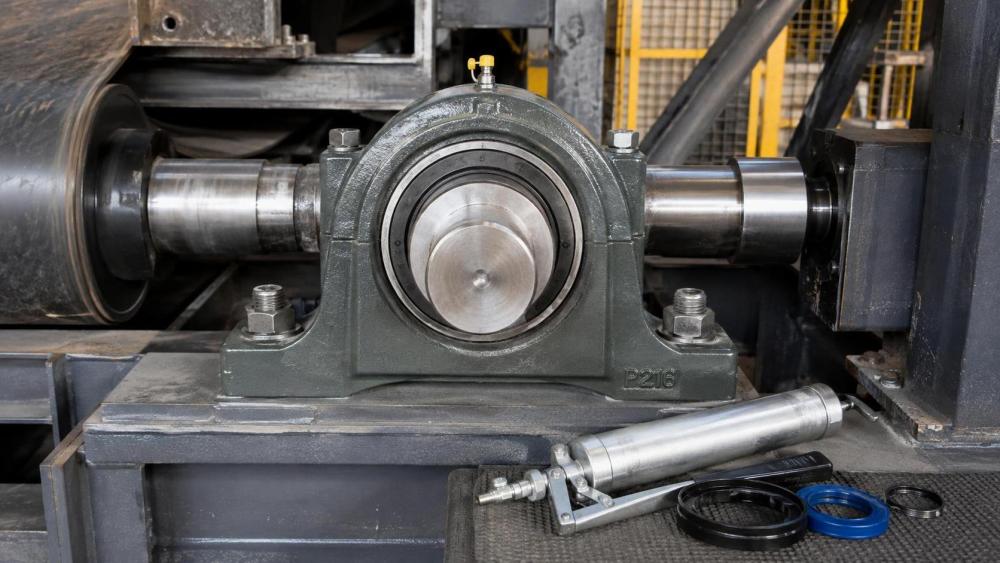
When a mounted bearing fails, maintenance personnel should preserve the damaged unit for inspection. Raceway marks, grease condition, cage damage, and shaft wear provide evidence unavailable after disposal.
Premature replacement can restore production temporarily, but it does not solve the root cause. Repeated failures create unnecessary downtime, spare-parts consumption, labor costs, and avoidable safety exposure.
Begin by recording operating hours, bearing location, equipment speed, process load, shaft orientation, ambient temperature, lubricant type, and recent maintenance actions. These details make failure analysis more reliable.
Compare the failed location with nearby mounted bearings operating under similar conditions. A single recurring failure may indicate local misalignment, frame distortion, excessive belt tension, or a damaged shaft seat.
If several bearings fail across one conveyor, crusher, mixer, or processing line, examine system-level loading. Incorrect drive settings, structural vibration, product buildup, or process changes may exceed original design assumptions.
Maintenance teams should also verify whether the replacement is truly equivalent. A housing may look identical while bearing internal clearance, locking method, seal arrangement, grease specification, or load rating differs.
Failure evidence should be documented with photographs and short observations before cleaning components. This practice supports decisions by supervisors, OEMs, suppliers, and reliability engineers when recurring failures require escalation.
Overload and Shock Loading Damage the Raceway First
Heavy duty mounted bearings are selected using calculated load ratings, but real equipment often experiences transient loads beyond normal production values. Shock events can permanently indent rolling surfaces.
Typical shock-loading sources include jammed conveyors, dropped material, impact crushers, reversing drives, sudden starts, emergency stops, and uneven loads entering mixers, screens, and agricultural processing equipment.
When rolling elements strike overloaded raceways, they create small indentations called brinell marks. Subsequent rotation produces vibration, noise, increased heat, and progressive surface fatigue around damaged areas.
True brinelling usually follows severe static or impact overload. False brinelling resembles similar marks but develops from small oscillating movements, particularly during transport, standby, or vibration exposure.
Do not assume a larger bearing alone will resolve overload. The shaft, housing, mounting bolts, base frame, coupling, and driven equipment must also withstand the revised load path.
Check actual belt tension, chain tension, process torque, and start-stop frequency against design values. Over-tightened belt drives are a frequent, preventable source of excessive radial loading.
For impact-prone applications, consider bearings with appropriate internal clearance, robust housings, high-capacity sealing, and application-specific lubrication. Review whether a plummer block or split housing better suits service conditions.
Where shock loads cannot be eliminated, reduce their transmission through improved process control, torque limiting, soft starting, cushioning, or structural reinforcement. Bearing life improves when peak loads are controlled.
Misalignment Creates Heat, Edge Loading, and Seal Failure
Misalignment is one of the most common causes of early heavy duty mounted bearing damage. It forces rolling elements to carry load unevenly across raceways instead of distributing it properly.
Angular misalignment may result from inaccurate installation, distorted frames, uneven foundations, bent shafts, thermal growth, weld repairs, or machine movement under changing production loads.
Parallel shaft misalignment is especially important in coupled drives. It increases bearing load while causing coupling wear, vibration, shaft deflection, and elevated temperature at one or both support points.
Some mounted bearing designs tolerate limited misalignment through spherical seating or self-aligning internal geometry. This tolerance is not permission to ignore poor shaft positioning or damaged support structures.
Use straightedges, dial indicators, laser alignment tools, or practical shaft-reference measurements according to the machine’s criticality. Verification after installation is more valuable than relying on visual alignment alone.
Inspect the bearing base and mounting surface for paint buildup, burrs, corrosion scale, weld spatter, or soft shims. An uneven housing foot can distort the bearing housing during bolt tightening.
Check bolt torque in the correct sequence. Loose bolts allow housing movement, while excessive or uneven torque can distort some mounting arrangements and create misalignment after commissioning.
Pay attention to thermal expansion on long shafts and high-temperature machinery. A fixed-and-floating support arrangement may be necessary so axial shaft growth does not overload mounted bearing units.
Contamination Destroys Lubricant Before It Destroys the Bearing
Dust, water, abrasive fines, chemicals, and fibers are particularly destructive because they compromise both the grease and the rolling contact surfaces. Contamination often shortens life without obvious early warning.
In mining, aggregate, cement, food processing, agriculture, wastewater, and outdoor equipment, seals must be selected for the actual contaminant, washdown practice, temperature, and shaft surface condition.
Abrasive particles suspended in grease act like grinding media. They score raceways, increase friction, accelerate wear, and generate more metallic debris that further degrades the lubricant.
Water contamination can reduce grease consistency, promote corrosion, wash away additives, and allow surface pitting. Steam, pressure washing, condensation, and flooded bearing locations require specific protective measures.
Inspect seals for hardening, tears, displacement, worn lips, and grease leakage. A damaged seal may be more important than the bearing itself because it permits contamination to enter continuously.
Labyrinth, taconite, contact, non-contact, and multi-lip sealing arrangements offer different tradeoffs. The correct choice depends on speed, friction limits, contaminant severity, pressure washing, and relubrication capability.
Grease purge is useful only when performed correctly. A small, controlled purge can remove contaminated grease, but excessive pressure may dislodge seals or force grease into unsuitable areas.
Keep grease guns, fittings, caps, and storage containers clean. Introducing dirt during relubrication defeats the purpose of maintenance and can create an immediate contamination source inside the housing.
Lubrication Errors Are More Complex Than “Too Little Grease”
Insufficient lubrication allows metal contact between rolling elements and raceways. The resulting friction raises temperature, damages surface finish, and can rapidly lead to discoloration, smearing, or seizure.
Overgreasing can also cause failure, especially at higher speeds. Excess grease churns, generates heat, increases seal pressure, and may prevent the bearing from reaching stable operating temperature.
Select grease based on base-oil viscosity, thickener compatibility, operating temperature, speed, water resistance, extreme-pressure requirements, and load severity. A general-purpose grease may not suit heavy duty service.
Mixing incompatible greases can soften or harden the lubricant, alter oil release, and reduce mechanical stability. When changing grease types, confirm compatibility or thoroughly purge the old lubricant.
Relubrication intervals should reflect actual service rather than calendar convenience. High contamination, high temperature, vibration, moisture, and heavy loading usually require shorter and more controlled intervals.
Use a calculated grease quantity as a starting point, then verify operating temperature, purge behavior, and grease condition. Maintenance records should show amount, date, lubricant, and observed condition.
A sudden increase in grease consumption or purge leakage may indicate worn seals, incorrect grease pressure, excessive internal clearance, or bearing damage. Treat it as an inspection trigger.
For inaccessible or critical locations, automatic lubricators can improve consistency. They must still be correctly sized, protected from heat and vibration, and checked for blocked lines or empty reservoirs.
Installation Quality Determines Whether the Bearing Starts With a Defect
Many mounted bearing failures begin during installation. Dirt on the shaft, an incorrect fit, damaged locking screws, improper torque, or excessive hammering can introduce damage before normal operation begins.
Clean the shaft and inspect it for scoring, corrosion, out-of-roundness, taper, and fretting. A worn shaft seat prevents correct locking and allows relative movement beneath the bearing bore.
Measure shaft diameter at several locations when repeated loosening occurs. A shaft outside tolerance can cause creep, fretting corrosion, uneven loading, and damage to both shaft and bearing.
Follow the locking procedure for the specific unit. Set-screw, eccentric collar, adapter sleeve, withdrawal sleeve, and hydraulic locking systems each require different installation methods and torque values.
Never strike the bearing ring, cage, or housing with a hammer to force installation. Apply mounting force only to the ring with the interference fit, using approved tools where required.
Before final tightening, position the housing so it is not forced into alignment by bolt tension. Rotate the shaft manually and confirm smooth movement before the machine is released.
After initial run-in, recheck mounting bolts, locking devices, temperature, vibration, and grease leakage. Early verification catches settling, housing movement, and installation errors before they become failures.
Vibration, Electrical Damage, and Heat Need Separate Checks
Vibration can be both a symptom and a cause of bearing failure. Unbalance, loose foundations, gear damage, belt defects, and process pulsation transmit harmful loads into mounted bearings.
Routine vibration trending helps identify changes before catastrophic damage occurs. Rising overall vibration is useful, but frequency analysis is more effective for separating bearing defects from other machine faults.
Electrical current passing through a bearing can cause fluting, frosting, and washboard-like raceway patterns. This risk is common near variable-frequency drives, large motors, and poor grounding arrangements.
Where electrical discharge is suspected, inspect raceways carefully and evaluate shaft grounding, insulated bearing options, conductive brushes, and motor-drive installation practices. Lubrication alone will not solve electrical erosion.
High temperature reduces grease life and may change internal clearance. Measure housing temperature under stable load, then compare trends rather than relying only on one absolute temperature reading.
Investigate sudden temperature changes promptly. Possible causes include overgreasing, inadequate grease, high ambient heat, seal drag, overload, misalignment, insufficient clearance, or developing internal damage.
A Practical Maintenance Routine for Longer Service Life
Create a route-based inspection program for every critical heavy duty mounted bearing location. Use equipment criticality, production consequences, safety risk, and historical failure data to set inspection frequency.
During routine checks, listen for abnormal noise, observe grease leakage, inspect seal condition, check housing security, and note changes in temperature, vibration, shaft movement, and product buildup.
Use simple condition categories such as normal, monitor, schedule repair, and immediate action. Clear categories help shift teams communicate consistently and prevent warning signs from being ignored.
Trend measurements instead of judging each reading independently. A bearing running at a stable elevated temperature may be acceptable, while a modest but consistent rise can indicate developing trouble.
Keep records connected to the exact bearing position, not merely the machine name. Location-specific history reveals patterns such as one overloaded tail pulley, one wet zone, or one misaligned drive.
Review lubrication routes after changes in production rate, material type, washdown frequency, ambient temperature, or operating hours. Maintenance instructions should evolve when service conditions change.
Maintain appropriate spares with verified dimensions, load ratings, seal types, locking systems, and grease compatibility. An unsuitable emergency replacement can create a second failure before the original cause is resolved.
When replacing a failed unit, inspect the shaft, housing base, fasteners, adjacent drive components, and lubrication hardware. A bearing should be treated as part of a complete support system.
Make Service-Life Decisions Using Evidence, Not Assumptions
A heavy duty mounted bearing rarely fails because it was simply “bad.” In harsh-load applications, service life reflects the combined effect of loading, alignment, sealing, lubrication, mounting, and machine condition.
Maintenance personnel achieve the best results by identifying the damage pattern, correcting the operating cause, and confirming improvement through temperature, vibration, grease condition, and inspection records.
Where failures repeat, escalate from routine replacement to structured root-cause analysis. The cost of measuring alignment, load, contamination sources, and shaft condition is usually lower than recurring downtime.
Reliable mounted bearing performance depends on disciplined installation and condition-based maintenance. When the bearing, housing, lubricant, seals, and supporting structure are treated as one system, service life becomes controllable.
Related News
- How to Assess a Rigid Coupling Supplier for Bore Accuracy and Traceable QualityOct 08, 2026Tribology & Kinematics Expert
- Titanium Alloys Compared: Balancing Strength, Corrosion Resistance, and MachinabilityOct 08, 2026CNC Kinematics Architect
- Where Ductile Iron Dismantling Joints Reduce Alignment Risk in Water PipelinesOct 08, 2026Pipeline Metallurgy Scientist
- Selecting a Precision Bearing Sleeve: Fits, Runout, and Material ChoicesOct 08, 2026Tribology & Kinematics Expert
- Face Milling Cutters: How Insert Geometry Affects Finish on Steel and AluminumOct 08, 2026CNC Kinematics Architect
- Single-Acting Cylinders for Clamping: Stroke, Force, and Return Spring ConsiderationsOct 07, 2026Fluid Power Control Strategist