
Bearing Lock Washers: When They Improve Retention in High-Vibration Machinery
Bearing lock washers can improve fastener retention in high-vibration machinery, but they are not a universal remedy for loose joints. Their value is greatest when a correctly designed bolted joint is exposed to repeated vibration, cyclic loading, or shock that could gradually reduce clamp force or promote nut rotation. If preload is wrong, mating surfaces are poor, or the joint is moving because of a design problem, adding a washer alone will not create a reliable connection.
This distinction matters in equipment such as pumps, gearboxes, conveyors, hydraulic power units, machine frames, agricultural machinery, and heavy-duty drive assemblies. A loose fastener can lead to misalignment, damaged bearing seats, fluid leakage, guard failure, or progressive structural damage. The practical question is not simply whether a lock washer is “better,” but whether it is compatible with the joint, the loading pattern, and the assembly method.
What bearing lock washers do
The term bearing lock washers is often used broadly for washers intended to help retain a bearing-related fastener or resist loosening around rotating equipment. Depending on the assembly, this may refer to tab washers used with bearing locknuts, toothed washers, split lock washers, wedge-lock washer pairs, or specially shaped retention washers. These products do not all work in the same way, so they should not be treated as interchangeable.
A bolted joint primarily stays secure because tightening stretches the bolt and compresses the clamped parts. This creates preload, also called clamp load. External vibration does not usually loosen a properly preloaded joint merely by shaking it. Loosening becomes more likely when transverse movement occurs between the joined parts, when the joint settles after assembly, or when repeated loading reduces the friction that resists rotation.
Locking washers add a secondary resistance mechanism. A tab washer may physically prevent a locknut from rotating once its tab is bent into position. A toothed washer can bite into suitable contact surfaces. A wedge-lock pair uses its cam geometry to oppose rotational loosening. The useful mechanism depends on the washer type and the actual failure mode.
When they add meaningful retention
Lock washers are most justified where vibration is real, the consequence of loosening is significant, and the joint design allows the washer to work as intended. Bearing housings and shaft-mounted components are common examples because even small changes in retention can affect bearing clearance, alignment, lubrication control, and rotating balance.
They are often appropriate in the following situations:
- Locknuts on bearing sleeves or shafts: Tab-type locking arrangements can provide a clear mechanical stop against locknut rotation when the locknut and shaft system is designed for that washer.
- Machinery with repeated shock or direction changes: Equipment with start-stop motion, impact loading, reciprocating movement, or frequent reversing may impose conditions that encourage relative movement in joints.
- Guarding and safety-critical attachments: Where a loose bolt could allow a protective cover, bracket, or restraint to shift, retention should be considered as part of the wider fastening strategy.
- Field-installed equipment: Assemblies exposed to variable installation quality, transport vibration, and maintenance intervention can benefit from a documented locking method, provided torque control is still applied.
- Hard-to-access joints: Where routine retightening is difficult, an appropriate retention feature can reduce the chance that a minor loss of clamp load develops into an unplanned shutdown.
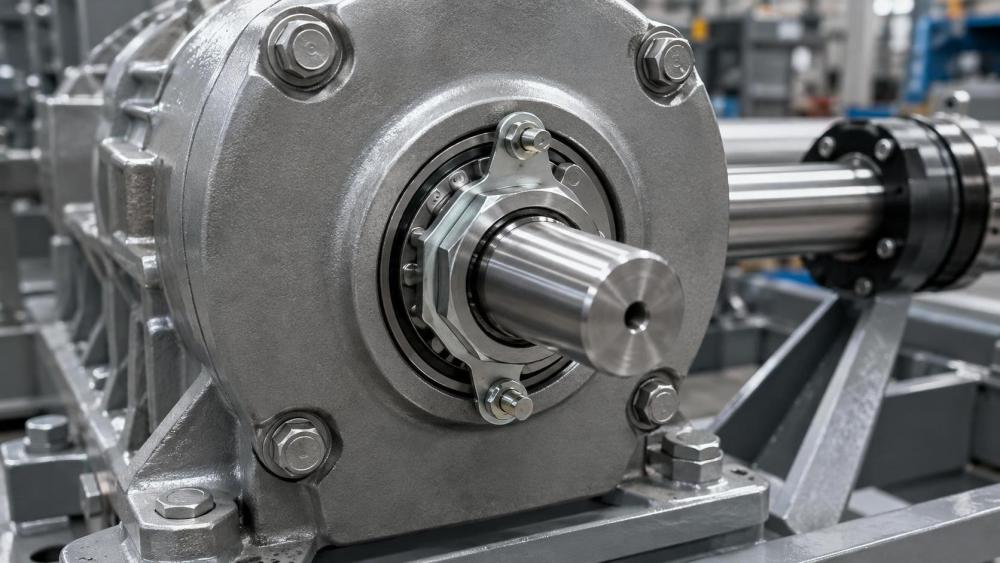
In power transmission equipment, the washer should be viewed as one element in a retention system. Bearing fit, shaft shoulder condition, locknut engagement, lubrication, alignment, and housing rigidity may all affect whether the bearing remains stable in service. A washer can help prevent rotation of a nut, but it cannot correct a bearing that is creeping because the shaft or housing fit is unsuitable.
Vibration alone is not enough reason to add a washer
A common error is to specify lock washers wherever vibration is present. Nearly all industrial machines vibrate to some degree. The more useful question is whether vibration creates joint slip: small sideways movement between the clamped components. Once that movement occurs repeatedly, the bolt or nut may rotate loose over time.
Before changing the washer type, inspect whether the joint has enough preload and whether the clamped parts are stiff enough. Thin brackets, uneven cast surfaces, paint under the washer, soft gasket materials, burrs, or poor flatness can settle after tightening. This relaxation reduces clamp force even if the nut never visibly turns. A locking washer may still be present, but the joint can become loose because the clamped stack has compressed or worn.
For this reason, a washer should not be used to compensate for:
- Incorrect torque or inconsistent tightening tools;
- Damaged, stretched, corroded, or mismatched fasteners;
- Insufficient thread engagement;
- Oil, paint, plating, or debris that changes friction unpredictably;
- Warped mounting faces or poorly machined bearing supports;
- Movement caused by misalignment, imbalance, or inadequate structural stiffness.
Where loosening repeatedly appears at the same location, the investigation should start with joint condition and loading, not with a blanket replacement of all washers.
Different locking methods solve different problems
The table is not a ranking. A tab washer can be the most direct and dependable option for a compatible bearing locknut, while a wedge-lock washer may be more suitable for a vibrating motor base or gearbox support. The correct choice follows the joint design, not the reputation of a fastening product.
Surface condition can determine whether the washer works
Washers act against the surfaces they contact. That makes surface condition a functional issue, not merely an appearance issue. A washer installed over thick paint, loose scale, damaged plating, weld spatter, or a rough casting face may settle as the machine runs. The result is lower clamp force and a misleading assumption that the washer has failed.
For bearing-related assemblies, contact faces also need to be free from raised burrs and damage that prevents even seating. A lock washer with a bent or partially engaged tab should be replaced rather than straightened repeatedly. Reuse can reduce its ability to hold position and may introduce cracks or distortion. Similar caution applies to washers with damaged teeth, flattened locking features, or visible corrosion.
Material compatibility deserves attention in wet, corrosive, or chemically exposed equipment. Corrosion products can alter friction, reduce section thickness, and make later inspection difficult. Selection should account for the fastener material, local coating system, operating temperature, and exposure to water, lubricants, hydraulic fluid, or cleaning chemicals.
Inspection should focus on the joint, not only the washer
A visual check can identify a displaced tab, missing washer, damaged locknut, rust staining, witness marks, or a gap between clamped parts. Those signs are useful, but they are late indicators. A better inspection routine checks the whole fastening condition.
- Confirm that the washer type matches the drawing, maintenance instruction, or approved assembly specification.
- Check that it is installed in the intended orientation and fully seated against clean contact faces.
- Verify that the fastener or locknut has been tightened using the approved method, not simply tightened “until it feels secure.”
- Look for evidence of movement: polished contact areas, fretting debris, paint cracking, shifted alignment marks, or elongated holes.
- Inspect associated components, including bearing housings, shaft shoulders, brackets, and guards, for distortion or wear that could unload the joint.
- Record recurring loosening by location and operating condition. Repeated failure at one point often indicates a loading or design issue that needs engineering review.
Torque checks require care. Applying additional torque during an inspection can hide the original condition and may change the evidence needed for failure analysis. Where retention is critical, the maintenance plan should define the inspection method, acceptance criteria, and escalation path before service work begins.
Use lock washers as part of a controlled fastening decision
In high-vibration machinery, the strongest retention strategy usually begins with a sound joint: suitable bolt size and grade, adequate engagement, clean and stable surfaces, correct preload, and components stiff enough to remain clamped. Bearing lock washers then provide value where their specific locking action addresses a credible risk of rotation or movement.
For quality and safety review, the most useful first questions are straightforward: What is moving? Is preload being lost, or is the nut rotating? Is the washer compatible with the nut and contact surfaces? Could a loose joint affect guarding, pressure containment, alignment, or rotating parts? Answers to those questions lead to a more reliable decision than treating every vibration problem as a washer-selection problem.
In machinery involving bearings, gearboxes, hydraulic equipment, and fabricated supports, retention details deserve the same disciplined review as fits, tolerances, lubrication, and inspection access. A correctly selected washer can be a small component with an important role, but its performance depends on the integrity of the complete joint.
Related News
- How to Assess a Rigid Coupling Supplier for Bore Accuracy and Traceable QualityOct 08, 2026Tribology & Kinematics Expert
- Titanium Alloys Compared: Balancing Strength, Corrosion Resistance, and MachinabilityOct 08, 2026CNC Kinematics Architect
- Where Ductile Iron Dismantling Joints Reduce Alignment Risk in Water PipelinesOct 08, 2026Pipeline Metallurgy Scientist
- Selecting a Precision Bearing Sleeve: Fits, Runout, and Material ChoicesOct 08, 2026Tribology & Kinematics Expert
- Face Milling Cutters: How Insert Geometry Affects Finish on Steel and AluminumOct 08, 2026CNC Kinematics Architect
- Single-Acting Cylinders for Clamping: Stroke, Force, and Return Spring ConsiderationsOct 07, 2026Fluid Power Control Strategist