
Forged Disc Price Guide for Industrial Buyers: Tolerance, Alloy, and Batch Size
Evaluating forged disc price is never just about the quoted number. For industrial buyers and business evaluators, tolerance requirements, alloy selection, and batch size directly shape cost, risk, and long-term value. This guide explains how these three factors influence pricing, helping you compare suppliers more accurately and make sourcing decisions that balance performance, compliance, and budget.
What Buyers Are Really Asking When They Search “Forged Disc Price”
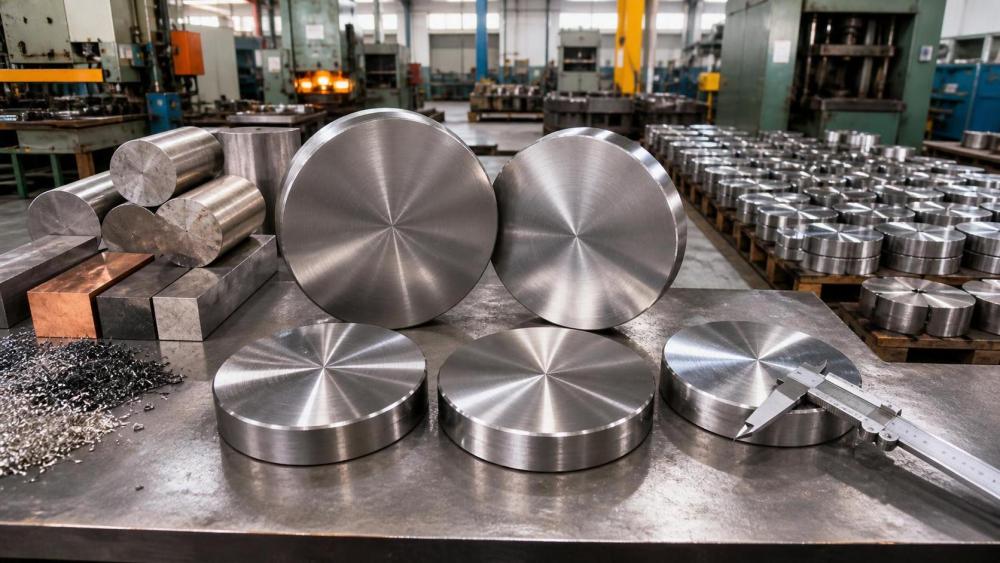
Most business evaluators are not looking for a simple price list. They want to know why two forged discs with similar dimensions can carry very different quotations.
The core search intent is commercial and comparative. Buyers want a practical framework to judge whether a forged disc price is reasonable for the required performance.
They are usually comparing suppliers, validating budgets, or preparing procurement decisions. In that context, the quoted number matters less than what is included, controlled, and guaranteed.
For this audience, the main concern is not only unit cost. It is whether the part will meet tolerance, material, and delivery expectations without creating downstream quality risk.
That is why the most useful way to read forged disc price is through three cost drivers: tolerance level, alloy choice, and batch size economics.
Why a Forged Disc Price Can Vary So Much Between Suppliers
At first glance, forged discs may appear straightforward. In practice, pricing can shift sharply because the supplier is estimating far more than raw material and press time.
A quote may include forging only, or it may include rough machining, heat treatment, ultrasonic testing, material certification, and final dimensional inspection.
Some suppliers quote aggressively on the base disc, then add charges later for tighter tolerances, upgraded alloy traceability, or smaller production runs.
Others build those costs into the first quotation. Without a structured comparison, a lower initial forged disc price can become the more expensive option after revisions.
Industrial buyers should therefore review price in the context of scope. The commercial question is always: what level of process control and compliance is being purchased?
How Tolerance Requirements Change the Cost Structure
Tolerance is often one of the fastest ways to move forged disc price upward. The tighter the dimensional and geometric requirement, the more process discipline is required.
Loose tolerances usually allow standard forging practice with limited finish machining. Tight tolerances often demand extra stock planning, secondary machining, and more inspection hours.
In many projects, tolerance affects cost more through manufacturing complexity than through material consumption. A disc that must run true in assembly cannot rely on rough forging alone.
For example, tighter flatness, concentricity, or thickness control may require additional CNC operations after forging. That adds setup time, tooling wear, and quality verification steps.
Business evaluators should ask whether the tolerance is function-driven or simply inherited from a legacy drawing. Over-specifying tolerance is a common and expensive procurement mistake.
If the application does not require micron-level precision, relaxing the drawing to a realistic industrial limit may reduce total cost without affecting performance or service life.
On the other hand, underestimating tolerance needs can create hidden losses. Assembly failure, imbalance, rework, and warranty exposure can outweigh any savings from a cheaper quote.
The key procurement lesson is simple: tolerance should be purchased as a business necessity, not as a default assumption.
How Alloy Selection Impacts Forged Disc Price Beyond Raw Material
Alloy selection is the second major driver, and its impact goes far beyond the metal price per kilogram. Different grades change forging behavior, heat treatment needs, and inspection standards.
Carbon steel discs are often the most economical option for general industrial use. Low-alloy and stainless grades usually cost more because they require tighter process control.
High-performance materials such as alloy steels for pressure, wear, or high-temperature service increase cost further through both material premium and manufacturing difficulty.
Some alloys have narrower forging temperature windows. Others respond differently to deformation, cooling, or heat treatment, which raises rejection risk and process planning effort.
In practical sourcing terms, the quoted forged disc price reflects not just what the metal costs, but how hard it is to transform that alloy into a compliant part.
Traceability also matters. When a project requires mill test reports, heat number traceability, or third-party witness inspection, the administrative and compliance burden rises.
For regulated or high-risk applications, buyers should expect alloy-related price increases to include certification discipline as well as metallurgical work.
That cost is often justified. A cheaper alloy or weaker traceability package may reduce purchase price while increasing lifecycle risk, especially in pressure, rotating, or safety-critical systems.
Why Batch Size Strongly Affects Unit Economics
Batch size is where many non-technical buyers gain their biggest pricing advantage. Forged disc price is highly sensitive to how fixed costs are spread across the order quantity.
Every production run carries setup costs: die preparation, machine scheduling, material allocation, process planning, sampling, and inspection documentation.
When the order is very small, those fixed costs are absorbed by only a few pieces. That pushes the unit price up, even if the disc itself is not particularly large or complex.
As quantity increases, the unit cost usually drops because setup, handling, and quality preparation are distributed across more parts.
However, the savings are not unlimited. After a certain volume, additional discounts may flatten because material, machining time, and energy still remain variable cost drivers.
For business evaluators, the practical question is whether demand can be consolidated. Combining forecasted requirements into a planned batch often improves purchasing efficiency.
This must be balanced against inventory cost, cash flow, and specification stability. Buying too much at once can create holding risk if the design changes later.
The best sourcing outcome often comes from finding the economic batch size where unit price improves without creating unnecessary stock exposure.
What to Compare in a Quote Besides the Headline Price
Industrial buyers should never compare forged disc price on a single line-item basis alone. A reliable decision requires checking what each supplier has actually included.
Start with the technical scope: forging route, machining allowance, heat treatment condition, dimensional tolerance, and required testing standards.
Then review the quality package. Does the quote include material certificates, hardness reports, ultrasonic testing, PMI, or third-party inspection support where needed?
Next, examine commercial terms. Lead time, minimum order quantity, scrap policy, packaging standard, and export documentation can materially affect the total landed cost.
A supplier with a slightly higher price may still be the better option if the quote is more complete, lead time is shorter, and quality risk is lower.
By contrast, a low forged disc price can become misleading when critical operations are excluded and later billed as extras or handled through change orders.
For procurement teams, the useful discipline is to normalize quotations into the same technical and commercial basis before ranking suppliers.
How to Judge Whether a Forged Disc Price Is Competitive or Risky
A competitive quote is not simply the lowest one. It is the quote that aligns cost with application requirements while keeping avoidable risk under control.
If one supplier is significantly below the market range, buyers should investigate the reason. The difference may come from lower-grade input, looser controls, or incomplete scope.
Warning signs include vague wording around tolerance, unclear alloy origin, missing testing details, or broad disclaimers about final machining responsibility.
Another risk signal is unrealistic lead time paired with a low price. That can indicate overpromising, subcontract uncertainty, or poor production planning.
Business evaluators should also consider supplier capability history. A proven forging partner with stable metallurgy and repeatable dimensions often delivers better total value than a cheaper newcomer.
In industrial purchasing, a quote becomes risky when low price depends on assumptions that have not been explicitly documented.
Questions Procurement Teams Should Ask Before Approving a Purchase
Before placing an order, buyers should ask a focused set of questions that connect price to operational reality. This step often prevents expensive misunderstandings later.
First, is the specified tolerance truly required by the application, or can it be adjusted without harming fit, balance, or service performance?
Second, is the selected alloy driven by actual duty conditions, or was it carried forward from a conservative specification that no longer reflects the use case?
Third, what quantity creates the best commercial balance between unit price reduction and inventory exposure?
Fourth, which inspections and certifications are mandatory for acceptance, and are they already included in the quote?
Finally, does the supplier have the machining, heat treatment, and quality capability to control the full process, or will critical operations be outsourced?
These questions help transform forged disc price from a number on paper into a meaningful procurement decision.
A Practical Buying Strategy for Better Price-to-Value Results
For most industrial sourcing projects, the best approach is to define the functional requirement first, then let that requirement shape cost discussions.
Start by confirming service conditions, dimensional criticality, and compliance needs with engineering and quality stakeholders.
After that, request quotations on a clearly normalized basis. Suppliers should be pricing the same alloy grade, tolerance band, heat treatment state, and inspection package.
Where possible, ask for price breaks by quantity. This gives procurement a direct view of how batch size affects the economics.
It is also useful to request optional pricing scenarios. For example, compare the effect of standard versus tight tolerance, or carbon steel versus low-alloy material.
Those structured alternatives help business evaluators build a defensible sourcing recommendation, especially when budgets are under pressure.
Instead of negotiating blindly, the buyer can then focus on the variables that actually move forged disc price in a measurable way.
Conclusion: The Best Forged Disc Price Is the One That Fits the Real Requirement
For industrial buyers, forged disc price should be evaluated as a combination of manufacturing difficulty, material performance, and order economics.
Tolerance drives machining and inspection effort. Alloy drives metallurgical complexity and compliance demands. Batch size determines how efficiently fixed production costs are absorbed.
When these three factors are reviewed together, pricing becomes easier to interpret and supplier comparisons become more accurate.
The strongest buying decisions usually come from resisting two common mistakes: paying for unnecessary specification severity, and accepting low quotes with hidden quality risk.
If your team wants better sourcing outcomes, treat forged disc price as a value-and-risk decision rather than a simple unit-cost exercise.
That approach leads to clearer budgets, stronger supplier alignment, and more reliable industrial procurement results.
Related News
- Using Industrial Air Blow Guns to Clear Chips Without Spreading DebrisOct 15, 2026Fluid Power Control Strategist
- Ductile Iron Pipe Valves: Which AWWA Standards Apply to Water Main Projects?Oct 15, 2026Dr. Elias Vance
- Why Vacuum Suction Cups Lose Grip on MDF in Woodworking MachinesOct 15, 2026CNC Kinematics Architect
- Choosing a Variable Displacement Piston Pump Manufacturer: What to VerifyOct 15, 2026Fluid Power Control Strategist
- Parallel vs. Angular Pneumatic Grippers for Confined Assembly StationsOct 15, 2026Fluid Power Control Strategist
- Die Castings vs. Investment Castings: Which Costs Less at Your Production Volume?Oct 14, 2026Foundry Phase-Change Fellow