
When to Use Hydraulic Sequence Valves in Multi-Actuator Circuits
Hydraulic sequence valves become relevant when a hydraulic system has more than one actuator, but the machine cannot allow those actuators to move at the same time or in an uncontrolled order. In project terms, this usually appears as a reliability problem rather than a component-selection problem. A clamp reaches late and the press stroke starts early. A stabilizer cylinder steals flow from a lifting cylinder. A door actuator opens before pressure is fully built in a locking mechanism. On paper the circuit may look complete; in operation the sequence is unstable.
For project managers and engineering leads, the decision to use sequence control is rarely about adding “another valve.” It is about deciding whether actuator order must be enforced by pressure logic, whether the risk of motion conflict justifies extra circuit complexity, and whether the operating conditions are stable enough for a sequence valve to remain predictable over the life of the equipment.
That is why sequence valves are common in presses, clamping systems, lifting and locking assemblies, outriggers, machine tools, material handling equipment, and heavy industrial machinery where one motion must wait until another has reached a required load or end condition. In these cases, timing by operator habit or pump oversizing is not a serious control strategy.
What a sequence valve is actually solving
A hydraulic sequence valve is a pressure-controlled valve that opens only after upstream pressure reaches a preset value. In practical circuit design, that means one actuator is allowed to complete or substantially resist movement before flow is sent to the next actuator. The valve does not “understand” position by itself; it reacts to pressure. That distinction matters because many field problems come from assuming pressure sequence is the same as position sequence.
If cylinder A extends freely with little resistance, pressure may remain too low to open the sequence valve for cylinder B. If cylinder A hits a workpiece, clamps a part, or reaches end-of-stroke and pressure rises, the valve opens and allows the next action. This makes sequence valves useful when force buildup is the real trigger condition.
They are less ideal when exact spatial position, variable external load, or dynamic synchronization is the primary requirement. In those cases, a project team may need limit switches, proximity sensing, proportional control, flow dividers, or electrohydraulic logic instead of relying only on pressure sequencing.
When a sequence valve is the right choice in multi-actuator circuits
The strongest case for using Hydraulic Sequence Valves is when the machine needs a fixed action order and each step naturally creates a pressure threshold. Typical examples include:
- Clamp-then-work circuits: a clamping cylinder must secure a part before a punching, drilling, pressing, or cutting cylinder operates.
- Support-then-lift systems: stabilizers or locking cylinders must engage before a lifting or rotating actuator receives flow.
- Extend-then-lock assemblies: a primary actuator reaches travel, then pressure rises to trigger a locking pin or holding mechanism.
- Safety interlock motions: guards, latches, or mechanical restraints must engage before the main force-generating actuator starts.
- Load transfer stages: one cylinder must take load before another retracts or releases.
In these applications, sequence valves help simplify logic without requiring a full electronic control architecture. They are especially attractive in mobile equipment, rugged industrial machinery, and hydraulic packages operating in harsh environments where mechanical-hydraulic logic is preferred for durability.
From a project perspective, the valve is worth considering when uncontrolled concurrent movement would create one or more of the following:
- part damage or tooling collision;
- operator safety exposure;
- unstable cycle time;
- excessive troubleshooting during commissioning;
- high dependence on operator timing;
- repeatability problems under changing load.
Situations where sequence valves are often specified too quickly
Not every multi-actuator problem should be solved with pressure sequence control. A common design mistake is using a sequence valve to compensate for weak circuit definition. If the real requirement is accurate end-position confirmation, a pressure valve alone may be too indirect. If the machine sees widely changing friction, temperature, payload, or backpressure, the opening point may no longer correspond consistently to the intended motion stage.
This is where many projects run into a gap between schematic logic and field behavior. Pressure-based sequencing works best when the trigger event is repeatable. It works less well when loads are highly variable, seals wear unevenly, or downstream line pressure changes significantly during the cycle.
Project teams should hesitate before using a sequence valve as the primary control element when:
- the actuator must move only after exact position confirmation;
- the upstream load changes significantly from cycle to cycle;
- multiple actuators must move in close coordination rather than simple order;
- energy efficiency is a major priority and the design would rely on frequent pressure buildup just to trigger the next step;
- the system already includes PLC-based control and sensing that can provide more deterministic logic.
In such cases, the better solution may be a hybrid approach: pressure control for force protection, and sensors or electronic logic for motion confirmation.
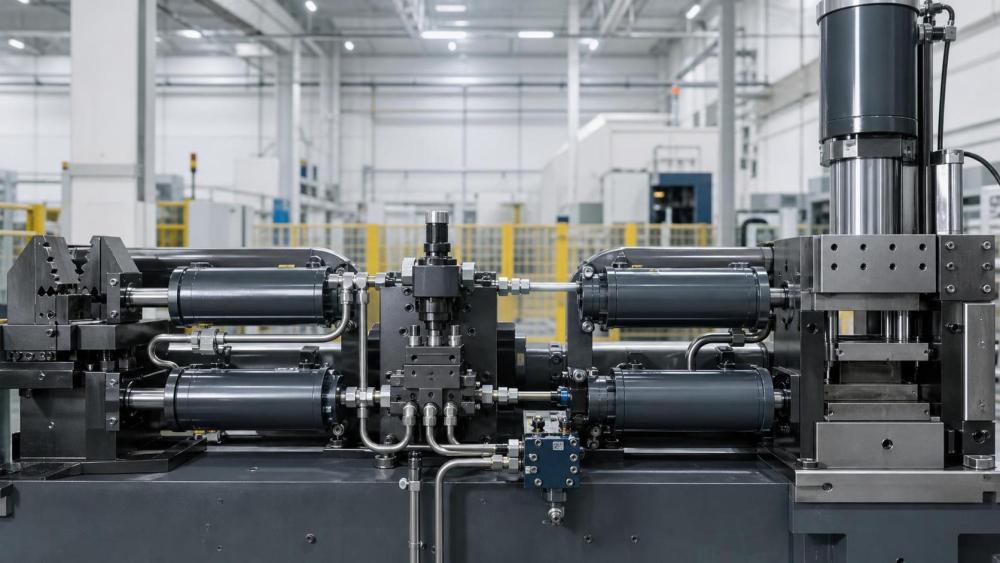
The key engineering question: is pressure a reliable proxy for completion?
This is the central judgment. Sequence valves are effective when pressure rise indicates that the previous actuator has done what it needs to do. In a clamping circuit, that may be true: once the clamp contacts the workpiece and reaches the required force, line pressure increases sharply, making it a reasonable trigger. In a positioning cylinder moving a variable load across low friction, pressure may tell you very little about whether the target position has actually been reached.
For project managers, this affects commissioning risk. If pressure is not a reliable proxy, the machine may pass a workshop test under one set of conditions and fail in the field under another. That creates expensive debugging later, especially in export equipment, remote installations, or municipal and industrial project sites where hydraulic specialists are not immediately available.
Before approving a sequence-valve-based circuit, it is worth asking:
- What physical event causes the pressure rise?
- Will that event occur consistently across all expected loads and temperatures?
- Could backpressure or downstream restrictions falsely trigger the valve?
- What happens if the first actuator stalls before completing useful work?
- Can maintenance technicians adjust the setting incorrectly in the field?
Common application patterns in industrial equipment
In machine tools and workholding systems, sequence valves are often used so the clamping cylinder reaches force before feed or forming motion begins. This is one of the more suitable applications because the clamp event naturally generates pressure. The commercial value is also clear: repeatable clamping protects tooling, supports part quality, and reduces scrap caused by premature process motion.
In heavy equipment and mobile hydraulics, sequence valves can manage support legs, booms, locks, or auxiliary functions where one hydraulic action must establish machine stability before another begins. Here the valve reduces operator dependence, but the circuit must account for vibration, contamination, temperature swings, and pressure spikes typical of field equipment.
In industrial presses, a sequence valve may control pre-clamp, work stroke preparation, ejector timing, or return sequencing. However, press applications also highlight the limits of pure pressure logic. If tooling setup changes frequently or if force curves vary by job, the preset value may need revalidation, not just initial commissioning.
In automation cells using hydraulic actuation, sequence valves still have a place, but many newer systems combine them with sensors and electrical control layers. The reason is not fashion; it is traceability. Projects increasingly need diagnosable behavior, fault feedback, and easier integration with machine safety and production monitoring systems.
What sequence valves change at the project level
For engineering management, adding a sequence valve changes more than fluid routing. It affects commissioning effort, documentation, spare parts, troubleshooting skill requirements, and sometimes operator training. The valve can reduce mechanical conflict and improve process consistency, but it also introduces a setting that must be selected, tested, and protected from casual adjustment.
The cost issue is usually misunderstood. The valve itself is not normally the main cost driver. The larger cost question is whether its use prevents downtime, rework, cylinder damage, bent tooling, shock loading, or unsafe motion. If the sequence requirement is real, omitting the valve often costs more later in field failures than including it in the original design.
At the same time, overspecifying sequence valves in a poorly understood circuit can increase complexity without solving root problems. This is why good hydraulic projects do not treat sequence valves as universal safety devices. They are control elements with specific strengths and limits.
Design and specification points that should not be left vague
When a project team decides that a sequence valve is appropriate, several details deserve early attention.
Set pressure range: The opening pressure must sit above the normal pressure required for the first actuator’s free motion, but below levels that create unnecessary heating or overstress. This sounds obvious, yet many unstable systems come from settings chosen without enough margin analysis.
Drain arrangement: Internal versus external drain selection can materially affect behavior depending on downstream pressure conditions. If backpressure at the outlet is significant, the valve may not perform as expected unless the drain strategy is correct.
Reverse flow requirement: Many circuits need free reverse flow through a check valve bypass so the actuator can return without waiting for sequence pressure again. Failure to address this can create sluggish return or trapped pressure problems.
Load holding interaction: If the actuator also relies on counterbalance, pilot-operated check, or load-holding valves, the combined behavior must be reviewed. One valve’s protective function can interfere with another valve’s sequence assumption.
Contamination control: Small hydraulic control passages are sensitive to contamination. If filtration discipline is weak, sequence performance becomes less predictable over time.
Adjustment access: On machines shipped globally, field adjustment should be controlled. A circuit that depends on precise pressure setting but allows unrestricted tampering is inviting service claims.
Frequent troubleshooting symptoms that point to sequence-valve mismatch
Project teams often encounter the same field complaints:
- the second actuator starts too early;
- the second actuator never starts unless pressure is increased beyond acceptable levels;
- machine behavior changes when oil warms up;
- cycle order is correct with no load but fails under production load;
- return stroke is delayed or erratic;
- operators report “sometimes it works, sometimes it hesitates.”
These symptoms do not always mean the valve is defective. They often mean the pressure trigger was never stable enough for the real operating envelope. In project review meetings, this is an important distinction. Replacing components one by one can waste time if the issue is fundamental logic selection rather than part quality.
How to decide during design review
A useful decision path is straightforward. If the application needs one actuator to move only after another develops a known force or reaches a stop that creates a repeatable pressure rise, a sequence valve is usually a sound and economical option. If the application needs confirmed position, variable-step logic, data feedback, or adaptive control under changing loads, pressure sequencing alone is unlikely to be enough.
For project managers, the practical test is not “Can a sequence valve be used here?” but “Will this valve still produce the intended order after installation, load variation, temperature change, maintenance intervention, and years of wear?” That is the level at which hydraulic design decisions begin to affect warranty cost, uptime, and operator confidence.
Used in the right context, Hydraulic Sequence Valves are one of the simplest ways to make multi-actuator circuits safer and more disciplined. Used in the wrong context, they can hide design uncertainty until the machine reaches the field. The difference comes down to whether pressure truly reflects the process event you are trying to control.
Related News
- How to Assess a Rigid Coupling Supplier for Bore Accuracy and Traceable QualityOct 08, 2026Tribology & Kinematics Expert
- Titanium Alloys Compared: Balancing Strength, Corrosion Resistance, and MachinabilityOct 08, 2026CNC Kinematics Architect
- Where Ductile Iron Dismantling Joints Reduce Alignment Risk in Water PipelinesOct 08, 2026Pipeline Metallurgy Scientist
- Selecting a Precision Bearing Sleeve: Fits, Runout, and Material ChoicesOct 08, 2026Tribology & Kinematics Expert
- Face Milling Cutters: How Insert Geometry Affects Finish on Steel and AluminumOct 08, 2026CNC Kinematics Architect
- Single-Acting Cylinders for Clamping: Stroke, Force, and Return Spring ConsiderationsOct 07, 2026Fluid Power Control Strategist