
How to Evaluate a Tie Rod Cylinder Manufacturer Beyond Price and Lead Time
Choosing a tie rod cylinder manufacturer is about far more than comparing price tags or quoted lead times. For procurement teams, the real decision should focus on engineering consistency, material traceability, sealing performance, testing capability, communication efficiency, and long-term supply reliability. This guide outlines the practical criteria that help buyers reduce risk, improve equipment uptime, and select a supplier that delivers lasting project value.
Why Procurement Should Look Beyond Price and Delivery
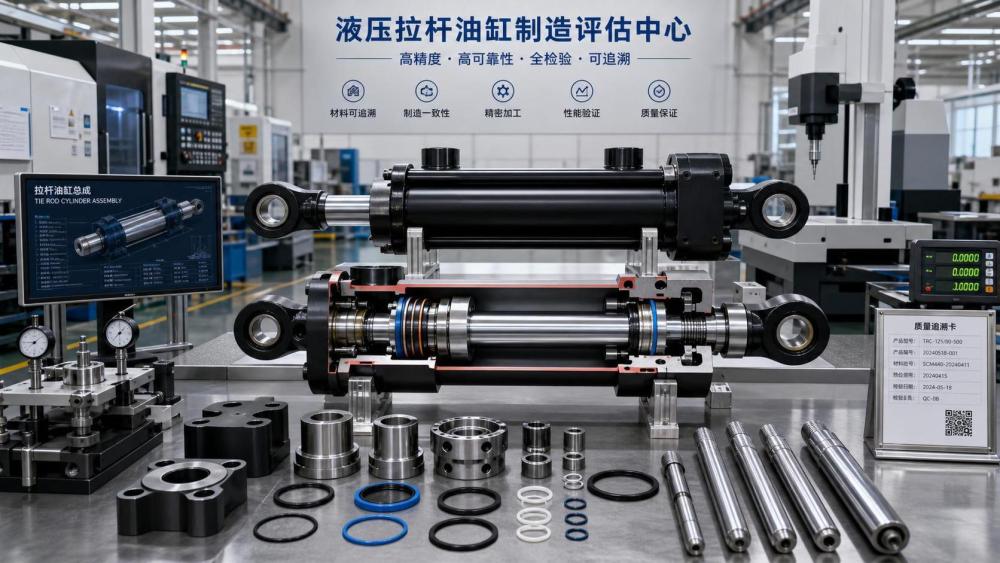
The core search intent behind evaluating a tie rod cylinder manufacturer is commercial and practical. Buyers want a reliable way to compare suppliers beyond quotations and avoid quality, delivery, and performance problems later.
For procurement teams, the main concern is not simply unit cost. It is whether the supplier can support stable production, consistent cylinder performance, and lower total ownership risk over repeat orders.
A low quoted price can become expensive when cylinders fail early, seals leak, dimensions drift, or documentation is incomplete. Lead time also loses value if shipments arrive with quality issues or application mismatches.
That is why the best evaluation process connects supplier capability to real operating results. In most industrial projects, downtime, maintenance, replacement, and claim handling cost more than a modest difference in purchase price.
When reviewing a tie rod cylinder manufacturer, procurement should focus on evidence. The goal is to verify whether the supplier can repeatedly build cylinders that match drawings, pressure requirements, and service conditions.
What Buyers Usually Care About Most
Procurement professionals usually begin with the same set of questions. Can this manufacturer deliver consistent quality, communicate clearly, provide traceable materials, and support our business when problems occur?
They also want to know whether the supplier understands the application. A tie rod cylinder used in agricultural machinery, mobile equipment, industrial presses, or automation lines may require different seals, rod coatings, and pressure margins.
Another key concern is hidden variability. One acceptable sample does not prove long-term capability. Buyers need confidence that the same standard will be maintained across batches, product revisions, and future scaling.
Commercial stability matters as well. A supplier with weak planning, poor raw material control, or limited inspection resources may create recurring risk even if the initial quote looks attractive.
In short, buyers are looking for proof of manufacturing discipline, not just sales responsiveness. The best content for this audience therefore needs to show how to judge real supplier strength.
Start With Engineering and Application Understanding
A capable tie rod cylinder manufacturer should ask technical questions before confirming a quote. If a supplier only responds with price and lead time, that is often a warning sign.
At minimum, the supplier should confirm bore size, stroke length, working pressure, mounting style, rod diameter, cushioning needs, operating speed, media exposure, ambient conditions, and duty cycle.
These details directly affect cylinder life and performance. A supplier that does not review them carefully may offer a standard product that fits dimensionally but performs poorly in service.
Buyers should also check whether the manufacturer can review drawings and recommend practical improvements. This may include seal configuration, rod material upgrades, surface treatment, or changes that improve maintenance intervals.
The best manufacturers do not overengineer every project. They help match cylinder design to the actual load, motion profile, contamination level, and service environment.
Assess Material Traceability and Component Quality
Material control is one of the most useful ways to evaluate a tie rod cylinder manufacturer beyond price. Cylinder barrels, piston rods, tie rods, end caps, seals, and bearings all affect service life.
Procurement teams should ask what materials are used for each major component and whether mill certificates or equivalent traceability records are available. This is especially important for demanding or safety-sensitive applications.
Rod quality deserves close attention. Straightness, base material, hard chrome thickness, surface finish, and corrosion resistance all influence sealing performance and wear behavior over time.
Barrel quality is equally important. Internal surface finish, dimensional tolerance, and consistency of honing affect seal life, friction, leakage, and motion stability.
Seal sourcing should also be reviewed. A manufacturer using recognized sealing brands or validated equivalent materials is generally better positioned to support consistent performance across multiple production lots.
Review Machining Precision and Assembly Discipline
Tie rod cylinders may appear simple, but performance depends heavily on precision machining and controlled assembly. Poor concentricity, surface finish problems, or weak thread quality can quickly reduce reliability.
Ask how the manufacturer controls tolerances on piston rods, glands, end caps, and barrel interfaces. Capability in CNC turning, boring, honing, grinding, and inspection is directly relevant here.
Assembly discipline matters just as much as machining accuracy. Seal installation methods, cleanliness control, torque procedures, lubrication practices, and end-of-line checks all influence field performance.
A good supplier should be able to explain how it prevents contamination during assembly. Dirt, burrs, or improper seal handling are common causes of early leakage and erratic motion.
If the manufacturer also handles custom machining in-house, that often improves responsiveness and dimensional control. It reduces dependence on outside subcontractors for critical cylinder components.
Verify Testing Capability, Not Just Stated Compliance
One of the strongest differentiators among suppliers is testing discipline. A dependable tie rod cylinder manufacturer should be able to show what tests are performed, how often, and to what acceptance standard.
Typical checks may include pressure testing, leakage testing, stroke verification, dimensional inspection, coating thickness measurement, surface roughness checks, and packaging validation before shipment.
For more demanding applications, buyers may also ask about fatigue testing, seal life validation, material hardness testing, salt spray resistance, or non-destructive testing on selected components.
The key question is whether testing is built into normal production or only arranged when a customer insists. A supplier with routine, documented quality checks usually presents lower long-term procurement risk.
It is also useful to ask for sample inspection reports. Real records reveal more than a generic claim of quality assurance because they show measurement structure, traceability, and consistency.
Check Documentation, Standards, and Change Control
Procurement teams often discover supplier weakness through documentation gaps rather than obvious product defects. Missing drawings, incomplete test records, and unclear revision control create risk across repeat orders.
A strong manufacturer should maintain controlled drawings, part identification, inspection records, material certificates, and order-level traceability that can be retrieved without confusion.
For OEM and project buyers, change control is especially important. If seal materials, rod coating suppliers, dimensions, or machining routes change, the customer should be informed before supply is affected.
Ask whether the supplier works to relevant hydraulic, pneumatic, or internal quality standards. Formal certification alone is not enough, but it helps when supported by disciplined execution.
Documentation quality often reflects management quality. A supplier that handles records clearly is usually easier to work with during audits, warranty review, and technical discussions.
Measure Communication Speed and Technical Responsiveness
Many sourcing problems are communication problems in disguise. A tie rod cylinder manufacturer may have decent production equipment but still create delays if technical questions are answered slowly or unclearly.
Procurement should evaluate how the supplier handles RFQs, drawing reviews, deviations, sample feedback, and urgent changes. Clear communication reduces mistakes before they enter production.
Useful signals include whether the supplier confirms assumptions, flags missing data, summarizes revisions accurately, and provides realistic timelines rather than optimistic promises.
For global buyers, language capability and response structure matter. A manufacturer that can communicate specification details clearly is usually easier to manage across engineering, quality, and logistics teams.
Responsiveness after shipment matters too. Support during installation issues, claims, or root cause analysis often separates a transactional supplier from a long-term manufacturing partner.
Evaluate Capacity, Supply Reliability, and Scalability
Procurement decisions should account for the supplier’s ability to support future demand, not only the first order. A manufacturer that can build prototypes may still struggle with repeat volume or mixed-model production.
Ask about monthly output, bottleneck processes, subcontract dependencies, raw material planning, and the flexibility to handle demand spikes. This helps buyers assess delivery risk more realistically.
Lead time should be examined in context. A short quoted lead time means little if it depends on unstable material sourcing or overloaded machining capacity.
It is also worth reviewing packaging, export handling, and shipping coordination. Cylinders can be damaged by weak protection on rods, ports, threads, or mounting points during transport.
Scalability includes commercial reliability. Can the supplier maintain quality, pricing logic, and communication standards as order size grows? That question matters for long-term procurement planning.
Compare Total Cost of Ownership, Not Unit Price Alone
The most practical way to compare suppliers is through total cost of ownership. This includes purchase price, quality risk, maintenance impact, delivery stability, claim cost, and equipment uptime.
A slightly higher quotation from a stronger tie rod cylinder manufacturer may be the better commercial decision if it reduces seal failures, shortens approval cycles, and improves replacement consistency.
Procurement teams should compare suppliers using a weighted matrix. Typical factors include technical fit, quality system, documentation, communication, testing capability, delivery reliability, and after-sales support.
This approach helps prevent decisions driven only by visible price differences. It also creates a clearer internal justification when sourcing teams need approval from engineering, operations, or management.
Where possible, connect supplier evaluation to measurable outcomes such as return rate, field failure frequency, maintenance hours, and line stoppage cost. That makes supplier value easier to defend.
Practical Questions to Ask Before Final Selection
Before choosing a manufacturer, buyers should ask for more than a catalog and quotation. Specific questions usually reveal whether the supplier operates with real process control or only basic sales capability.
Useful questions include: What materials are used for rod, barrel, and seals? What routine tests are performed? Can you provide traceability records? How are design changes controlled?
Also ask: Which processes are done in-house? What are your standard tolerance controls? How do you protect rods during shipment? What is your response process if a field issue occurs?
For custom or strategic supply, a sample order or pilot batch is often worth the time. It gives procurement and engineering teams direct evidence of dimensional consistency, documentation quality, and communication efficiency.
When possible, combine commercial review with a technical audit or structured supplier questionnaire. That creates a stronger basis for long-term approval than quotation comparison alone.
Conclusion
Evaluating a tie rod cylinder manufacturer beyond price and lead time is ultimately about reducing operational risk and protecting long-term project value. Procurement teams should focus on engineering understanding, material traceability, machining discipline, testing, documentation, communication, and supply stability.
The best supplier is not automatically the cheapest or the fastest on paper. It is the manufacturer that can consistently deliver cylinders that perform as expected, arrive with proper records, and support your business over time.
For industrial buyers, that broader view leads to better sourcing decisions. It improves uptime, lowers lifecycle cost, and turns supplier selection into a more strategic and defensible procurement process.
Related News
- How to Assess a Rigid Coupling Supplier for Bore Accuracy and Traceable QualityOct 08, 2026Tribology & Kinematics Expert
- Titanium Alloys Compared: Balancing Strength, Corrosion Resistance, and MachinabilityOct 08, 2026CNC Kinematics Architect
- Where Ductile Iron Dismantling Joints Reduce Alignment Risk in Water PipelinesOct 08, 2026Pipeline Metallurgy Scientist
- Selecting a Precision Bearing Sleeve: Fits, Runout, and Material ChoicesOct 08, 2026Tribology & Kinematics Expert
- Face Milling Cutters: How Insert Geometry Affects Finish on Steel and AluminumOct 08, 2026CNC Kinematics Architect
- Single-Acting Cylinders for Clamping: Stroke, Force, and Return Spring ConsiderationsOct 07, 2026Fluid Power Control Strategist