
How Proportional Valves Improve Motion Control in Variable-Load Hydraulic Systems
In variable-load hydraulic systems, operators usually care about one thing first: whether the machine can stay smooth, accurate, and predictable when the load suddenly changes. Proportional Valves matter because they let the system adjust flow and pressure continuously instead of switching only fully open or fully closed.
That directly improves motion control in real working conditions. A boom lifting uneven material, a press meeting changing resistance, or a handling arm stopping under different weights all benefit from steadier speed, better positioning, and lower shock.
For users and operators, the practical value is clear. Proportional Valves help reduce jerky movement, improve repeatability, cut unnecessary heat, and make equipment easier to control under mixed or changing loads.
Why Variable Loads Make Hydraulic Motion Hard to Control
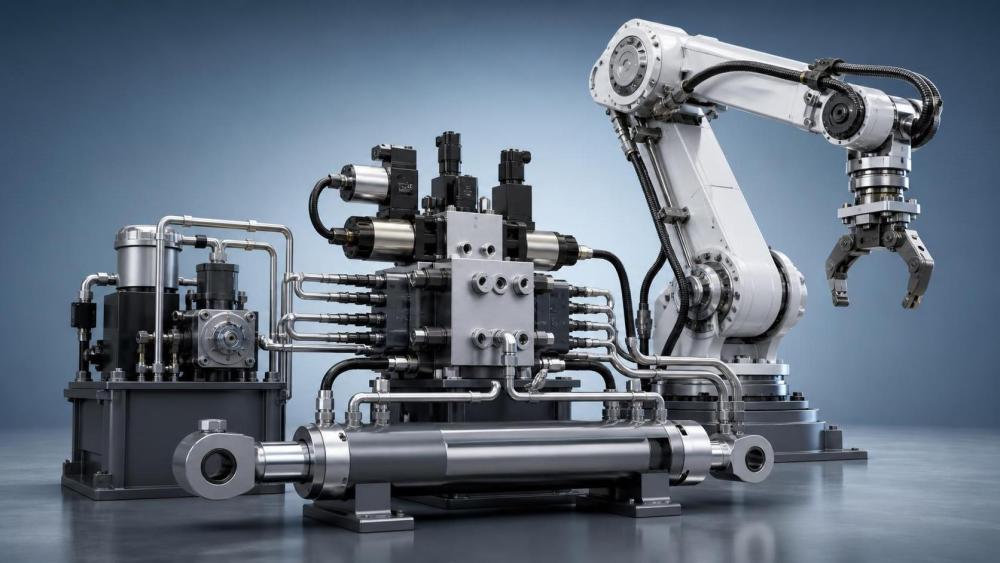
Hydraulic systems rarely work under constant load for long. In construction, forming, material handling, and industrial tooling, resistance changes from moment to moment as the machine accelerates, lifts, presses, or reverses.
When the load changes, the hydraulic actuator does not behave the same way it did a second earlier. Cylinder speed can drift, a motor can overshoot, or the system can react with pressure spikes and unstable motion.
Operators often notice the symptoms before they know the cause. The machine may feel jumpy at startup, too fast under light load, too slow under heavy load, or difficult to stop precisely.
Traditional on/off valves can move fluid, but they are limited when fine adjustment is needed. They switch between discrete states, so they are useful for basic control but less effective for smooth response under continuously changing demand.
This is where Proportional Valves change system behavior. Instead of abrupt hydraulic response, they allow gradual and controlled adjustment, helping the machine match output more closely to real load conditions.
What Proportional Valves Actually Do in Motion Control
A proportional valve regulates flow, pressure, or direction in proportion to an electrical input signal. Rather than acting like a simple switch, it behaves like a controllable metering device inside the hydraulic circuit.
That means the system can vary actuator speed more precisely. If the control signal increases slightly, the valve opening changes slightly, and the hydraulic output changes in a more predictable way.
In practical motion control, this gives operators and control systems a smoother relationship between command and movement. The machine does not have to jump from idle to full response when only a small correction is needed.
Proportional pressure control also matters in variable-load applications. When resistance changes, the valve can help manage pressure buildup more gradually, reducing the harsh reactions that often occur in less refined systems.
In many machines, proportional directional control valves are the core component for balancing movement quality and force response. They help coordinate acceleration, steady travel, deceleration, and stopping with greater consistency.
How Proportional Valves Improve Speed Stability Under Changing Loads
One of the biggest problems in variable-load systems is speed variation. A cylinder that moves at the correct speed with one load may slow down or surge when the load shifts.
Proportional Valves improve this by making flow control more responsive and adjustable. Instead of relying on a fixed or coarse flow path, the valve can continuously meter oil to better maintain target movement.
For the operator, that often means smoother extension and retraction, especially during partial strokes or when handling uneven workpieces. The equipment becomes easier to feather rather than simply push harder or back off.
In machines with electronic control, the effect is even stronger. Sensors and controllers can work with the proportional valve to correct speed deviations quickly, helping the actuator stay close to the desired profile.
This matters in applications such as lifting arms, clamping systems, feed mechanisms, and forming equipment. Stable speed supports better process control, less operator correction, and more consistent cycle quality.
Why They Reduce Shock, Jerking, and Overshoot
Operators often describe poor hydraulic motion as harsh, snappy, or difficult to settle. Those complaints usually point to sudden flow changes, pressure spikes, or weak deceleration control.
Proportional Valves help because they can ramp flow up and down more gradually. That smoother transition reduces the hydraulic shock that travels through cylinders, hoses, manifolds, and machine structure.
Less shock is not just a comfort issue. It can reduce mechanical stress on pins, linkages, seals, and mounting points, which helps support component life and lowers the chance of repeated impact-related wear.
Overshoot is another common problem under changing loads. A moving axis may continue past the intended position because the system cannot reduce energy smoothly enough before stopping.
With proportional control, deceleration can be shaped more effectively. The actuator can slow in a controlled way instead of stopping abruptly, which improves positioning and reduces the need for corrective repositioning.
How They Improve Positioning Accuracy and Repeatability
In many hydraulic applications, motion quality is judged by whether the actuator reaches the same point the same way every cycle. Under variable loads, that is difficult without fine control.
Proportional Valves improve repeatability by allowing smaller output corrections. The system can respond to different loads without relying on crude changes that introduce variation in speed and stopping behavior.
This is especially important where the operator must align, place, clamp, feed, or hold with confidence. Even if the machine is not performing ultra-precision motion, repeatable control still improves work quality.
For example, in a hydraulic press feed, proportional flow control can help keep material movement more consistent. In a lifting platform, it can support steadier travel and cleaner stopping at the intended level.
Good repeatability also reduces fatigue for the operator. When the machine reacts predictably, the user spends less time compensating for inconsistent motion and more time focusing on the task itself.
Where Users See the Biggest Performance Gains
Not every hydraulic machine needs the same level of control sophistication. The biggest gains from Proportional Valves usually appear where loads shift frequently and where smooth motion directly affects output or safety.
Mobile equipment is a strong example. Excavator attachments, loader arms, and lifting circuits often experience changing load weight, angle, and resistance, making smooth hydraulic response essential for controllability.
Industrial machinery also benefits. Presses, manipulators, fixture systems, rolling equipment, and automated handling devices often need stable force and motion despite changing contact conditions or payloads.
Machines with frequent starts, stops, reversals, or partial-position movements gain more than systems that only cycle between simple end positions. The more the process depends on controlled transition, the more value proportional control adds.
Users typically notice benefits in three areas first: easier operation, better product or process consistency, and reduced stress on the machine during demanding cycles.
What Operators Should Watch When Evaluating Proportional Valve Performance
Users do not need to design the valve to judge whether it is helping. They should watch how the machine behaves during startup, loaded travel, deceleration, and repeat cycles under different working conditions.
A good setup should produce smooth initial movement without a sharp jump. It should also maintain controllable speed when load increases, rather than stalling suddenly or forcing excessive operator correction.
Stopping behavior is another key indicator. If the actuator regularly bangs into position, rebounds, or overshoots under different loads, the control quality may be limited by tuning, valve selection, or system design.
Heat generation can also tell a story. Poorly matched hydraulic control often creates excess throttling losses or unstable cycling, which can raise oil temperature and reduce overall efficiency over time.
Noise and vibration should not be ignored either. Sudden pressure events, unstable flow, and repetitive shock often show up as audible strain long before they become obvious maintenance failures.
Selection Factors That Affect Real Results
Not all Proportional Valves deliver the same performance in the field. Real motion quality depends on selecting a valve with the right flow range, pressure rating, response characteristics, and control compatibility.
Valve size matters because an oversized valve can make fine low-flow control more difficult, while an undersized valve can restrict performance at peak demand. Matching the operating envelope is more useful than simply choosing the largest unit.
Response speed should fit the application. Fast response is valuable in dynamic systems, but it must work with stable tuning. A fast valve in a poorly matched circuit can still produce unstable motion.
Control electronics are also part of the result. The command signal, amplifier, controller logic, and sensor feedback all influence how well the proportional valve translates intention into consistent hydraulic behavior.
For operators and plant users, this means valve performance should be judged as part of the system, not as a standalone component. The best valve cannot compensate for every issue elsewhere in the circuit.
Common Limits and Misunderstandings
It is a mistake to assume that adding a proportional valve automatically guarantees precision. If the pump is unstable, the actuator leaks internally, the load is highly erratic, or the system is poorly tuned, results will still be limited.
Another misunderstanding is confusing smoother motion with lower power. In fact, better control often allows available hydraulic power to be used more effectively because the system is not wasting energy through abrupt corrections and shock events.
Maintenance condition also matters. Contaminated oil, worn seals, sticking spools, or weak electrical connections can degrade proportional valve behavior and make a good design perform badly in practice.
Users should also remember that some applications may need servo-level control, while others only need proportional improvement over basic valve setups. The right choice depends on the real process requirement, not on specification inflation.
Maintenance and Operating Practices That Support Better Motion Control
To get consistent benefit from Proportional Valves, users should treat hydraulic cleanliness as a control issue, not just a maintenance issue. Fine control components are sensitive to contamination and sticking.
Regular oil condition checks, proper filtration, and timely replacement of worn components help preserve predictable valve response. If spool movement becomes inconsistent, motion quality often degrades before a complete failure occurs.
Electrical integrity is equally important. Loose connectors, unstable signal input, or poor grounding can produce inconsistent valve commands, which may appear to operators as random motion instability.
Periodic review of tuning and response under real operating loads is useful, especially after changes in tooling, attachments, payload range, or cycle demands. Motion control quality should be checked under normal work, not only at idle.
Operator feedback should be taken seriously because users often detect drift in smoothness long before diagnostic alarms appear. Their observations are practical indicators of how the valve and system are actually performing.
Conclusion
In variable-load hydraulic systems, Proportional Valves improve motion control by giving the machine a more flexible and continuous way to regulate flow and pressure. That leads to smoother speed control, better deceleration, less shock, and more repeatable movement.
For users and operators, the value is practical rather than theoretical. A machine that responds predictably under changing loads is easier to control, more stable in daily work, and less likely to waste energy through harsh or erratic motion.
When properly selected, tuned, and maintained, Proportional Valves can make a clear difference in both handling quality and equipment performance. In demanding hydraulic applications, they are often one of the most effective tools for turning raw fluid power into controlled, usable motion.
Related News
- Using Industrial Air Blow Guns to Clear Chips Without Spreading DebrisOct 15, 2026Fluid Power Control Strategist
- Ductile Iron Pipe Valves: Which AWWA Standards Apply to Water Main Projects?Oct 15, 2026Dr. Elias Vance
- Why Vacuum Suction Cups Lose Grip on MDF in Woodworking MachinesOct 15, 2026CNC Kinematics Architect
- Choosing a Variable Displacement Piston Pump Manufacturer: What to VerifyOct 15, 2026Fluid Power Control Strategist
- Parallel vs. Angular Pneumatic Grippers for Confined Assembly StationsOct 15, 2026Fluid Power Control Strategist
- Die Castings vs. Investment Castings: Which Costs Less at Your Production Volume?Oct 14, 2026Foundry Phase-Change Fellow