
How to Evaluate a Suction Filter Manufacturer for Hydraulic System Reliability
Choosing the right suction filter manufacturer protects hydraulic pumps, limits contamination, and reduces costly failures across mobile machinery, industrial power units, presses, and heavy-duty equipment.
For procurement teams, the strongest supplier is rarely identified by catalog pricing alone. Reliable selection requires evidence of engineering capability, controlled manufacturing, validated performance, documentation, and responsive technical support.
A suction filter operates at the hydraulic pump inlet, where inadequate flow capacity or excessive restriction can create cavitation, noise, poor efficiency, and accelerated component wear.
This guide helps buyers evaluate suppliers through practical criteria: filtration design, pressure-drop behavior, material quality, testing, traceability, standards, delivery control, and lifecycle service.
Start With the Actual Hydraulic System Risk
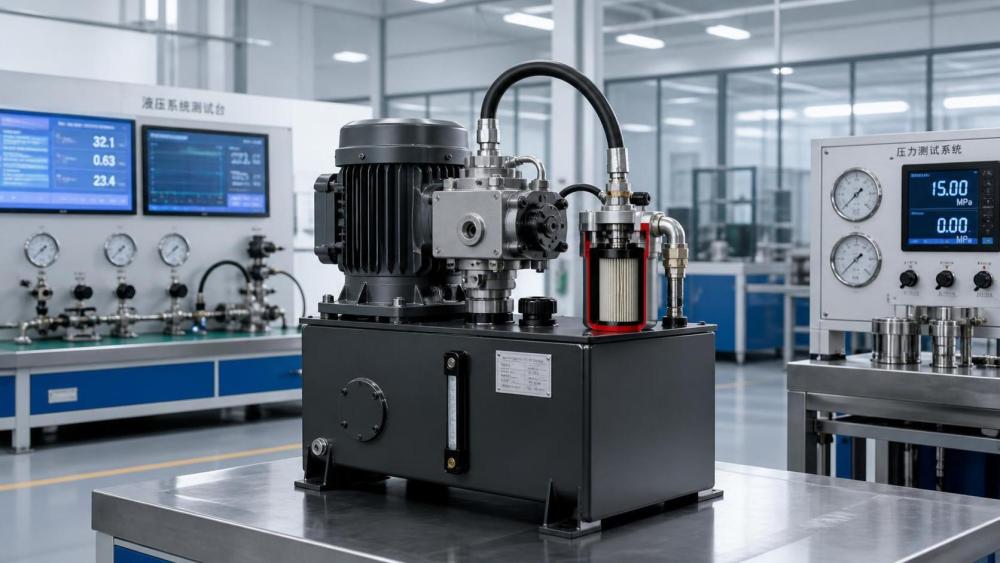
Before comparing any suction filter manufacturer, procurement teams should define the application rather than request a generic quotation based only on connection size and filter dimensions.
Hydraulic suction filtration requirements differ significantly between excavators, agricultural equipment, injection molding machines, mining machinery, industrial presses, and stationary hydraulic power units.
The filter must allow sufficient oil flow during cold starts, peak demand, and changing operating conditions. A correct nominal flow rating alone does not guarantee acceptable inlet performance.
Buyers should collect pump displacement, maximum speed, fluid viscosity range, inlet port size, expected flow, reservoir layout, duty cycle, contamination conditions, and target fluid cleanliness.
Also identify whether the filter is submerged, tank-mounted, inline at the inlet, or integrated into a custom reservoir assembly. Installation geometry affects sealing and service access.
Hydraulic pumps are vulnerable to inlet restriction. Excessive vacuum can cause cavitation, releasing vapor bubbles that damage surfaces, generate vibration, and reduce volumetric efficiency.
A capable manufacturer should ask technical questions before recommending a micron rating or housing. Suppliers that only send standard catalog pages may overlook application-specific operating risks.
Procurement teams should treat this initial discussion as an early qualification test. It reveals whether the supplier understands hydraulic reliability or simply sells interchangeable filtration hardware.
Verify Filtration Performance Without Creating Pump Restriction
The central evaluation challenge is balancing contamination control with unrestricted oil delivery. A finer filter can capture smaller particles, yet may produce unacceptable pressure drop.
Suction filters typically protect pumps from larger harmful debris entering from the reservoir. They should complement, rather than replace, pressure-line and return-line filtration strategies.
Ask the suction filter manufacturer to provide clean-element pressure-drop curves across relevant flow rates. Curves should identify the tested fluid viscosity and operating temperature.
Do not accept a single flow number without conditions. Flow claims based on low-viscosity fluid can be misleading for systems starting in cold climates or using heavier oils.
Compare pressure-drop data at normal operating flow, maximum demand flow, and cold-start viscosity. This approach exposes filters that appear adequate under nominal laboratory conditions.
For many hydraulic systems, coarse suction strainers are selected to protect pump inlets while minimizing restriction. Fine particle control is then managed downstream through dedicated filters.
Confirm the stated filtration rating method. Terms such as mesh size, nominal micron rating, and absolute micron rating do not describe equivalent levels of particle retention.
Ask whether the supplier can explain wire mesh construction, pore consistency, pleat configuration where applicable, open area, collapse resistance, and resistance to contamination loading.
A supplier should also explain the recommended clean-out or replacement interval. A filter that cannot be maintained easily can become a hidden source of hydraulic restriction.
Assess Materials, Construction, and Fluid Compatibility
Material quality affects more than corrosion appearance. It determines whether the filter withstands vibration, thermal cycling, contaminated fluid, installation stress, and repeated maintenance over time.
Review the housing, end caps, support tube, mesh, sealing elements, fasteners, and connection interfaces separately. Weakness in one component can compromise the entire assembly.
Steel mesh is common for durable suction strainer applications, but grade selection matters. Stainless steel may be necessary where corrosion, moisture, aggressive fluids, or extended service life apply.
For housings and fittings, determine whether the manufacturer uses carbon steel, aluminum alloy, stainless steel, engineering polymers, or ductile iron according to application requirements.
Ask for material specifications instead of relying on generic descriptions such as “high-quality steel.” Procurement documentation should identify material grades, coatings, and applicable treatment processes.
Seal compatibility must be reviewed against the hydraulic fluid. Nitrile, fluorocarbon, polyurethane, and other elastomers differ in their suitability for mineral oils, synthetic fluids, and temperature ranges.
Surface protection deserves attention for equipment used outdoors, near water, in mining environments, or within humid factories. Coating failures can contaminate reservoirs and weaken components.
Inspect design details that affect installation reliability, including thread standards, flange dimensions, weld integrity, mounting brackets, O-ring grooves, and protection against bypass leakage.
Manufacturers serving serious OEM programs should be able to provide drawings, material declarations, dimensional tolerances, and compatibility guidance before finalizing production orders.
Examine Manufacturing Control and Quality Evidence
Reliable filtration products depend on repeatable manufacturing, especially when buyers require large quantities across multiple machine platforms or long-term service parts programs.
Ask how the manufacturer controls mesh cutting, forming, welding, crimping, assembly, seal installation, and final inspection. These steps directly affect structural strength and sealing quality.
Welded mesh assemblies should be evaluated for sharp edges, incomplete joints, distortion, and loose particles. Manufacturing debris inside a new filter defeats its intended contamination-control purpose.
For threaded components, confirm how the supplier verifies dimensions and thread quality. Poor machining can create leaks, improper seating, or difficult assembly at the OEM facility.
Request examples of inspection records covering incoming materials, in-process checks, final dimensional verification, leak tests, pressure tests, and visual cleanliness inspections where relevant.
A mature suction filter manufacturer maintains documented control plans rather than depending exclusively on final inspection. Quality should be built into the process, not discovered after assembly.
Buyers should ask whether batches are traceable through lot numbers, inspection records, and material certificates. Traceability is especially important when supporting warranty investigations or safety-critical equipment.
Site audits or remote factory reviews can validate claims about production capability. Look for organized material storage, calibrated gauges, documented work instructions, and controlled handling practices.
Consistent quality also requires supplier management. Manufacturers should explain how they qualify mesh, seal, casting, machining, and coating suppliers that contribute to finished filter performance.
Review Testing Capability and Applicable Standards
Testing evidence separates a capable engineering partner from a catalog reseller. The supplier should demonstrate how its products are validated for the stated operating environment.
Relevant tests may include pressure-drop measurement, burst or collapse resistance, leak testing, vibration evaluation, thermal cycling, corrosion testing, and fluid compatibility assessment.
Not every suction strainer requires every test, but the manufacturer should match its validation approach to the product design, machine duty, hydraulic fluid, and customer specification.
Ask for the actual test method, sample configuration, test media, temperature, flow range, acceptance criteria, and report date. A simple “tested product” statement is insufficient.
Where filtration performance is critical, discuss recognized hydraulic filtration practices and relevant ISO test concepts. Suppliers should accurately distinguish product-specific results from general industry references.
Quality management certification can support confidence, but certification alone does not prove filter performance. ISO 9001, for example, should be supported by relevant technical records.
For international procurement, verify the standards used for threads, ports, material marking, drawings, packaging, and product labeling. Regional incompatibility can create installation delays.
Engineering teams may require first-article inspection reports or sample approval before production. Confirm whether the supplier has adequate equipment and personnel to support this requirement.
When applications involve custom reservoirs or nonstandard connections, require prototype testing before approving volume orders. This reduces the risk of fitment failures during equipment assembly.
Compare Technical Support and Customization Responsiveness
Procurement value improves when the supplier can resolve practical issues quickly. Hydraulic filters are often selected alongside tanks, pumps, manifolds, hoses, and reservoir accessories.
Evaluate whether the manufacturer can interpret drawings, recommend connection configurations, adjust lengths, revise mesh ratings, or develop custom assemblies within controlled lead times.
Customization should not mean uncontrolled variation. A reliable supplier documents revised drawings, approval samples, inspection requirements, and part-number changes before serial production begins.
Ask how technical questions are handled after purchase. Delayed responses during commissioning can stop equipment delivery, particularly when a replacement component must meet exact fit requirements.
Useful support includes installation guidance, torque recommendations, cleaning procedures, replacement intervals, troubleshooting advice, and clear explanations of pressure-drop limitations during cold operation.
For global equipment programs, confirm language capability, drawing revision control, export documentation, packaging requirements, and communication channels for urgent engineering or quality issues.
Suppliers should also be willing to identify limits. A credible manufacturer explains when a proposed fine mesh, undersized port, or compact filter body creates unacceptable pump inlet risk.
This technical honesty matters because buyers need long-term equipment reliability, not a quotation that wins initially but causes costly service claims later.
Evaluate Commercial Reliability Beyond Unit Price
A low purchase price can be attractive, but the commercial assessment should include quality costs, inspection burden, delivery consistency, spare-parts availability, and potential hydraulic failure exposure.
Compare quotations using identical technical assumptions. Confirm part numbers, mesh ratings, material grades, seals, coatings, thread standards, packaging, test requirements, and order quantities.
Unexpected differences often hide inside terms such as “equivalent,” “standard material,” or “customized design.” Clarify every assumption before selecting the lowest quoted supplier.
Review production capacity and realistic lead times. A supplier may produce acceptable samples but lack sufficient tooling, staffing, material inventory, or process control for sustained volume demand.
Ask about minimum order quantities, prototype lead times, blanket-order arrangements, safety-stock options, and service-part continuity. These terms influence equipment uptime and working capital planning.
Packaging should protect filters from moisture, deformation, dust, and shipping damage. Cleanliness matters because components entering a hydraulic reservoir must not introduce foreign material.
For imported products, include logistics risk in the sourcing decision. Evaluate export packing, labeling, customs documentation, shipment visibility, and the supplier’s response to damaged deliveries.
Establish measurable supplier performance criteria, including on-time delivery, defect rate, response time, document accuracy, corrective-action closure, and consistency between approved samples and production parts.
A structured scorecard helps procurement teams compare suppliers objectively and prevents decisions from being driven by unit price or sales presentation alone.
Use Samples and Supplier Audits to Reduce Selection Risk
For important hydraulic programs, the final decision should combine document review with physical validation. Samples reveal details that drawings and quotations cannot fully communicate.
Inspect sample filters for dimensions, thread fit, mesh integrity, weld quality, cleanliness, markings, seal placement, and compatibility with the intended reservoir or pump inlet arrangement.
Conduct installation trials under realistic conditions where possible. Monitor inlet vacuum, pump noise, fluid temperature, startup behavior, leakage, and accessibility during routine service.
Testing should include challenging conditions, especially cold fluid and high flow demand. These conditions often expose restrictions that remain hidden during room-temperature bench checks.
When defects occur, evaluate the supplier’s corrective-action process. Strong manufacturers identify root causes, define containment, revise controls, and provide evidence that improvements were implemented.
A supplier audit need not be excessively complex. Procurement and engineering teams can review quality systems, manufacturing flow, test equipment, traceability, change control, and shipment preparation.
For smaller orders, a remote audit using production videos, live inspections, document review, and third-party verification can provide useful risk reduction at lower cost.
The required validation depth should reflect failure consequences. A low-risk replacement strainer needs less scrutiny than a filter used in high-value mobile equipment or continuous industrial production.
Build a Practical Supplier Evaluation Checklist
Procurement teams should translate technical requirements into a repeatable checklist, allowing engineering, quality, purchasing, and service personnel to evaluate manufacturers using shared criteria.
Start with application fit: flow range, viscosity, micron rating, inlet connection, reservoir position, fluid type, temperature, contamination risk, and required maintenance access.
Then score product evidence: pressure-drop curves, material specifications, drawings, sealing details, mesh construction, corrosion protection, test reports, and sample inspection results.
Next assess manufacturing confidence through process controls, inspection plans, traceability, calibrated equipment, supplier management, corrective-action capability, and documented product revision control.
Commercial criteria should include quoted cost, lead time, capacity, packaging, payment terms, minimum order quantity, spare-parts support, warranty handling, and logistics competence.
Technical support deserves its own score. Measure response quality, application knowledge, customization ability, drawing turnaround, communication clarity, and willingness to challenge unsuitable specifications.
Weight these categories according to the application. For example, a critical mining machine may prioritize pressure-drop validation and traceability above small differences in unit price.
Document the final decision with approved drawings, performance requirements, inspection expectations, and change-notification rules. This creates a controlled basis for long-term supplier management.
Conclusion: Select Reliability, Not Just a Filter
Choosing a suction filter manufacturer is a hydraulic reliability decision, not merely a component purchasing exercise. The filter must protect the pump without restricting essential inlet flow.
The best suppliers provide application-specific recommendations supported by pressure-drop data, material documentation, controlled manufacturing, relevant testing, traceability, and reliable technical communication.
Procurement teams should verify performance during cold starts and peak flow, inspect samples carefully, and include lifecycle service risk in commercial comparisons.
By evaluating filtration, construction, validation, support, and supply consistency together, buyers can select partners that reduce maintenance exposure and improve long-term hydraulic system uptime.