
What Drives Steel Ingots Price Volatility for Industrial Procurement Planning?
What Drives Steel Ingots Price Volatility for Industrial Procurement Planning?
Steel ingots price volatility can quickly reshape budgets, supplier choices, and delivery strategies for industrial procurement teams. A movement in upstream steel costs does not remain confined to the mill. It can flow into quotations for forged shafts, valve bodies, machined housings, steel pipe, flanges, structural castings, gearbox components, hydraulic cylinders, and fabricated assemblies.
The difficult part is that an ingot price is rarely a complete purchasing signal. It reflects only one point in a broader chain that includes raw materials, melting, rolling or forging, heat treatment, machining, inspection, packaging, freight, and commercial risk. A buyer who follows only a headline steel price may miss the reasons why a supplier’s finished-part quotation moves at a different pace—or does not move at all.
For industrial procurement planning, the useful question is not simply whether steel is becoming more expensive. It is which cost driver is changing, how long the change may persist, which material grades and processes are exposed, and whether the project can absorb the resulting risk. That distinction matters especially where long lead times, customer-approved materials, pressure-service requirements, or heavy machining allowances are involved.
An Ingot Price Is an Upstream Signal, Not a Finished-Component Price
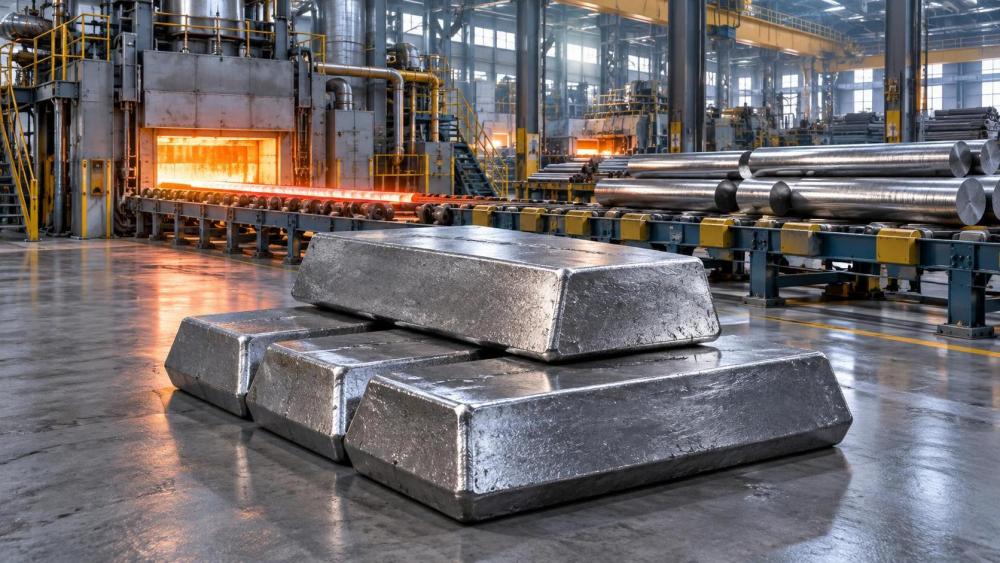
Steel ingots are cast blocks of steel intended for further processing. Depending on the supply chain and product family, mills and processors may work from ingots, billets, blooms, slabs, bar stock, plate, tube rounds, or other semi-finished forms. In modern procurement discussions, “steel ingots price” is often used more broadly as a reference to primary steel input costs. That shorthand is understandable, but it can create false comparisons.
A forged transmission shaft, for example, may be affected by the cost of alloy steel stock, forging energy, die wear, heat treatment, ultrasonic testing, rough machining, final machining, and balancing requirements. A steel pipe fitting may be driven by plate or billet availability, forming capacity, welding consumables, coatings, and dimensional inspection. A CNC-machined valve component can contain a relatively modest amount of steel by weight while carrying a high proportion of machining time and quality-control cost.
This is why procurement teams should separate metal-price exposure from conversion-cost exposure. Commodity-like products usually react more visibly to upstream steel movements. Complex engineered components may show a delayed or limited response because material is only one element of their total value.
Raw Materials Set the First Layer of Volatility
The steelmaking route matters. Producers using iron ore and metallurgical coal face different cost pressures from electric-arc-furnace producers that rely more heavily on ferrous scrap and electricity. Neither route is automatically more stable. Each responds to its own supply conditions, regional availability, transport constraints, and demand patterns.
Scrap markets can tighten when demolition flows are weak, manufacturing activity is strong, or export demand draws material away from local mills. Iron ore and coal costs can be influenced by mine output, weather-related disruption, port operations, inventory levels, and global industrial demand. Alloying elements add another layer. Stainless, tool steel, bearing steel, heat-resistant grades, and high-strength alloy steels may be exposed to the availability and cost of elements such as chromium, nickel, molybdenum, manganese, or vanadium.
For buyers, the practical point is simple: do not treat all steel grades as one market. Carbon steel, ductile iron, low-alloy forging stock, stainless grades, and specialty bar products can move differently. A price trend in one material family may not justify assumptions about another.
Energy, Capacity, and Production Disruptions Can Change Quotes Faster Than Demand Does
Steel production is energy-intensive. Electricity, natural gas, coke, oxygen, refractory materials, and industrial labor all affect the cost base. Where regional energy costs rise sharply or power supply becomes uncertain, mills may revise offers, shorten quotation validity, or become more selective about the orders they accept.
Capacity is equally important. A market may appear adequately supplied on paper while a particular mill, furnace route, bar size, or approved grade remains difficult to source. Maintenance shutdowns, equipment failures, quality holds, or reduced operating rates can constrain availability. The same applies downstream: an open-die forge, heat-treatment line, large-diameter machining center, coating facility, or non-destructive testing department may become the actual bottleneck rather than the steel mill.
This distinction explains a common procurement surprise. The published market direction may be flat, yet the quoted cost of a large forged part rises because qualified forging capacity is full. Conversely, steel input prices may increase while a supplier keeps a quotation unchanged to protect a strategic program or utilize available production capacity. Price behavior is commercial as well as metallurgical.
Trade Measures, Currency, and Freight Create Regional Steel Markets
Steel is globally traded, but industrial buyers do not purchase in one seamless global market. Import duties, trade remedies, local-content rules, customs procedures, sanctions, licensing requirements, and changing documentation expectations can alter the economics of a supply route. These factors need project-specific review rather than broad assumptions, particularly for public infrastructure, water projects, energy equipment, and regulated applications.
Currency movements can also materially affect landed cost. A supplier may buy steel in one currency, process it in another, and quote the final component in a third. Even where the steel ingots price is stable at the source, exchange-rate changes can alter the buyer’s actual exposure. This is common in cross-border sourcing of pipes, castings, forgings, valves, and machined assemblies.
Freight should not be treated as an afterthought. Heavy industrial goods are sensitive to container availability, bulk or breakbulk options, port congestion, inland trucking, route reliability, and packaging requirements. Long products, large forgings, pipe systems, and oversized fabricated equipment may require specialized handling. Freight volatility can therefore outweigh a modest change in raw steel cost, particularly on lower-value, high-weight products.
Why Finished Parts Do Not Follow Steel Prices in a Straight Line
A frequent mistake is to expect finished component pricing to rise and fall immediately with a steel market indicator. In reality, suppliers may have material inventory purchased at earlier prices, fixed agreements with mills, minimum-order commitments, or customer-specific stock. Their quotation may also include a material contingency intended to cover risk during a long production window.
Process yield is another overlooked factor. If a machining operation removes a large volume of material, the purchased blank weight can be far above the shipped part weight. A forged blank may require machining allowance; a casting may need additional stock for final dimensional control; a pressure-retaining part may be rejected if internal defects or material properties do not meet requirements. The metal value is tied to input weight and yield, not just the net weight shown on a drawing.
Technical requirements can make this gap wider. Material certificates, heat numbers, chemical analysis, mechanical testing, hardness verification, dimensional reports, coating documentation, and non-destructive testing all add cost and lead-time considerations. These are not optional extras when a drawing, customer specification, or applicable standard requires them. Reducing the material grade or documentation level simply to chase a lower price can shift risk into installation, safety, maintenance, or final acceptance.
What Procurement Teams Should Monitor Beyond the Headline Price
A resilient sourcing plan tracks a small set of commercial and technical signals rather than relying on a single market chart. The right mix varies by category, but the following questions expose much of the real risk:
- What exact material form is required: ingot-derived forging stock, billet, plate, bar, tube, or cast steel?
- Is the specified grade readily available in the required size, heat-treatment condition, and country of origin?
- How much of the final quotation is raw material, and how much is processing, testing, tooling, and logistics?
- Does the supplier quote a fixed price, a time-limited price, or a formula with a material adjustment mechanism?
- What inventory does the supplier already hold, and is it traceable to the required specification?
- Which lead-time stage is most exposed: mill allocation, forging, casting, machining, testing, coating, or shipping?
These questions are more useful when procurement, engineering, and quality teams review them together. Purchasing may see a cost increase, while engineering can determine whether an approved alternate material form, a revised blank strategy, or a different manufacturing route is technically acceptable. Quality can then confirm whether the alternative preserves traceability and inspection requirements.
Better Contract Structures Reduce Surprises, Not Market Risk Itself
No contract can eliminate price volatility, but a poorly defined commercial structure can turn an understandable market movement into a dispute. For repeat purchases, buyers may consider whether quotations should identify the material basis, validity period, currency, Incoterms, freight assumptions, and treatment of major changes in input cost. The appropriate approach depends on order volume, delivery horizon, and bargaining position.
For project-based equipment, it is often better to distinguish long-lead material commitment from final component release. A supplier may be able to reserve steel or forging stock after technical approval while machining details, coatings, accessories, or final delivery batches are still being finalized. This can reduce exposure to later material tightness, but it also requires clear rules for drawing changes, ownership of committed stock, and acceptance of material certificates.
Dual sourcing can help, but only when the sources are genuinely comparable. Two suppliers offering the same nominal grade may use different melt routes, blank suppliers, inspection practices, or heat-treatment controls. For critical shafts, pressure components, precision-machined parts, and infrastructure piping accessories, technical equivalence must be confirmed before supplier diversification is treated as a risk-control measure.
Using Market Intelligence Without Oversimplifying the Decision
The useful role of market intelligence is to frame better supplier conversations. A rising steel ingots price may justify asking for an updated material breakdown, revised quote validity, or confirmation of mill allocation. A falling market may justify checking whether future releases can be repriced—but it does not automatically mean that an existing engineered-part price is excessive. The answer depends on when stock was bought, what has already been processed, and how much conversion work remains.
Global Industrial Machining & Piping Equipment Network (IMPE) approaches this issue through the connected realities of materials, manufacturing processes, and application requirements. A buyer assessing forged components, ductile iron pipe systems, precision-machined parts, fluid-power equipment, or power-transmission assemblies needs more than a commodity trend. They need to understand how material performance, tolerances, production capability, inspection methods, and logistics affect the commercial result.
The most practical procurement response is to build a category-specific view of exposure. Map each purchased item to its steel form, grade, process route, qualified suppliers, lead-time stages, documentation requirements, and freight path. Then review that map when market conditions shift. It will not predict every movement in steel prices, but it will show where a price change is likely to become a delivery problem—and where it is simply a point for more informed negotiation.
Related News
- Using Industrial Air Blow Guns to Clear Chips Without Spreading DebrisOct 15, 2026Fluid Power Control Strategist
- Ductile Iron Pipe Valves: Which AWWA Standards Apply to Water Main Projects?Oct 15, 2026Dr. Elias Vance
- Why Vacuum Suction Cups Lose Grip on MDF in Woodworking MachinesOct 15, 2026CNC Kinematics Architect
- Choosing a Variable Displacement Piston Pump Manufacturer: What to VerifyOct 15, 2026Fluid Power Control Strategist
- Parallel vs. Angular Pneumatic Grippers for Confined Assembly StationsOct 15, 2026Fluid Power Control Strategist
- Die Castings vs. Investment Castings: Which Costs Less at Your Production Volume?Oct 14, 2026Foundry Phase-Change Fellow